
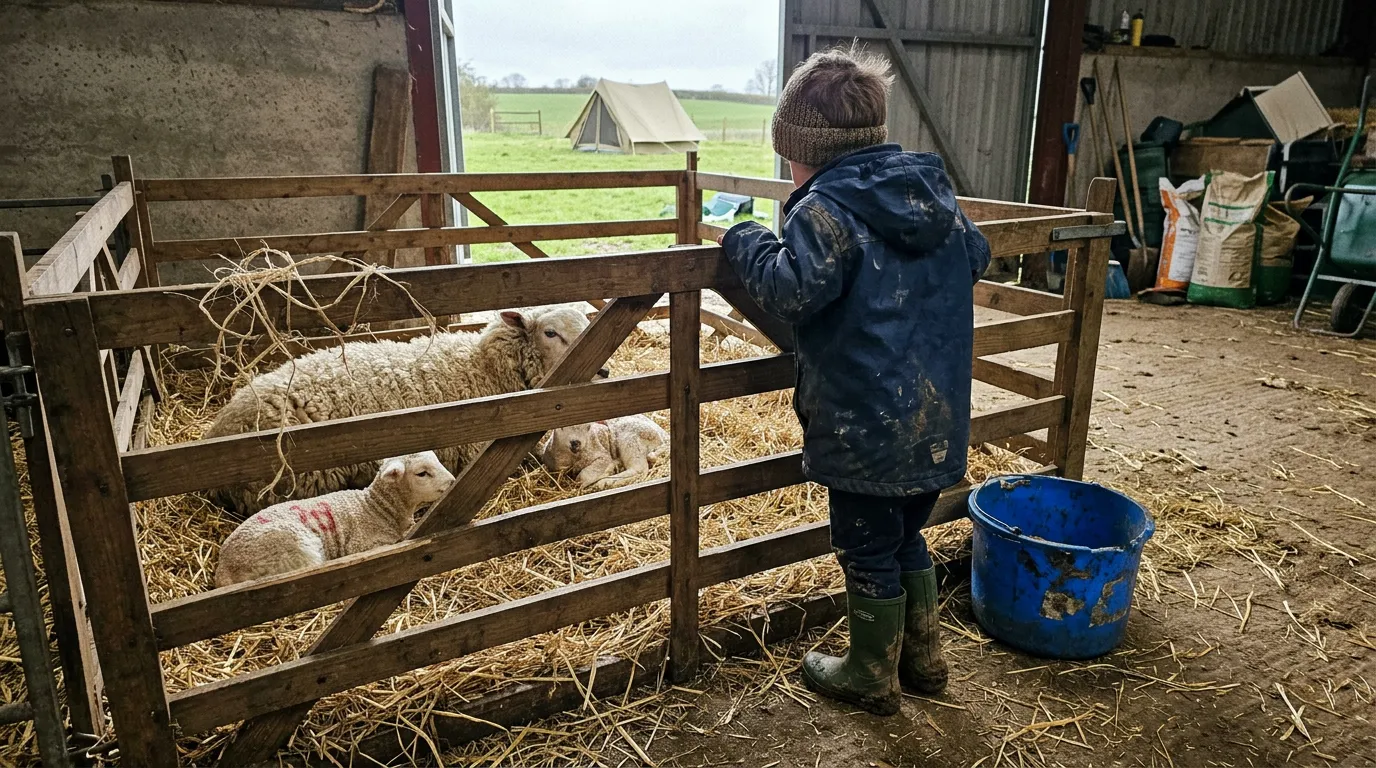
Lambing runs from November to May in the UK and peaks from February to April. Here's when to go, what a farm stay at lambing time is really like and which farms have lambs.
Picture a cold April morning. You unzip the canvas, pull on your wellies and follow the bleating across the yard to a shed full of straw, where a ewe is licking a lamb that's barely an hour old. That's lambing season on a family farm stay, and it's the bit children still talk about at Christmas. Timing is everything, though, if you want the wobbly first days rather than the stroppy teenage ones.
Here's when the lambs arrive, why one farm runs weeks ahead of the next, what you'll really do as a guest and which of our farm stays with animals have lambs in spring.
When is lambing season in the UK?
Lambs are born on British farms from November right through to May, but the big peak runs from February to April. Lowland sheep farms in the south usually start first, and hill farms lamb a month or so later, when the weather on high ground is kinder to a newborn.
It all goes back to the autumn. Rams (farmers call them tups) go in with the ewes in October and November, a ewe carries her lambs for around 145 days, and roughly five months later the shed fills up. Shepherds have a rhyme for it: in on Bonfire Night, out on April Fool's Day.
Here's how a typical lambing period plays out over the year.
| Month | On the farm | For a family stay |
|---|---|---|
| November to January | A few early flocks lamb indoors; most ewes are pregnant and on winter feed | Few lambs about, and most canvas farm stays are closed for winter |
| February | Early lambing on lowland farms, mostly in sheds | February half term; cold nights, so cottages beat tents |
| March | Lambing in full swing across southern England and Wales | The best month for newborns in the lambing shed |
| April | Lambs out in the fields; northern lowland farms in full flow | Easter holidays and the start of the farm glamping year |
| May | Hill farms lambing; older lambs racing about in gangs | May half term, long evenings, still bottle lambs to feed |
| June | Lambs growing fast, haymaking begins | Lambs in every field, but no more births |
Why one farm lambs weeks before another
Mostly, it's grass. A ewe feeding twins needs a huge amount of energy to make milk, and the cheapest, healthiest food going is fresh spring grass, so farmers time lambing for when their fields start growing. That happens weeks earlier in the mild south than in Northumberland or up on the fells.
Lowland flocks lamb from February, often in a shed at first, and twins are normal. That's where most bottle lambs come from. Hill sheep lamb in April and May on thinner grazing, and more of them have singles. Some breeds, like the Dorset, can breed almost all year, which is why you might spot newborns in a Cornish field in November.
What a farm stay during lambing time is really like
This isn't a petting-zoo visit with a timed slot. Stay on a working farm in spring and the lambs are part of your day from breakfast to bedtime, as many hosts invite guests on the morning animal round: checking the pens, carrying hay and filling water buckets before the kettle's boiled back at the tent. It's a busy, muddy, brilliant way to learn how much care and welfare goes into every lamb.
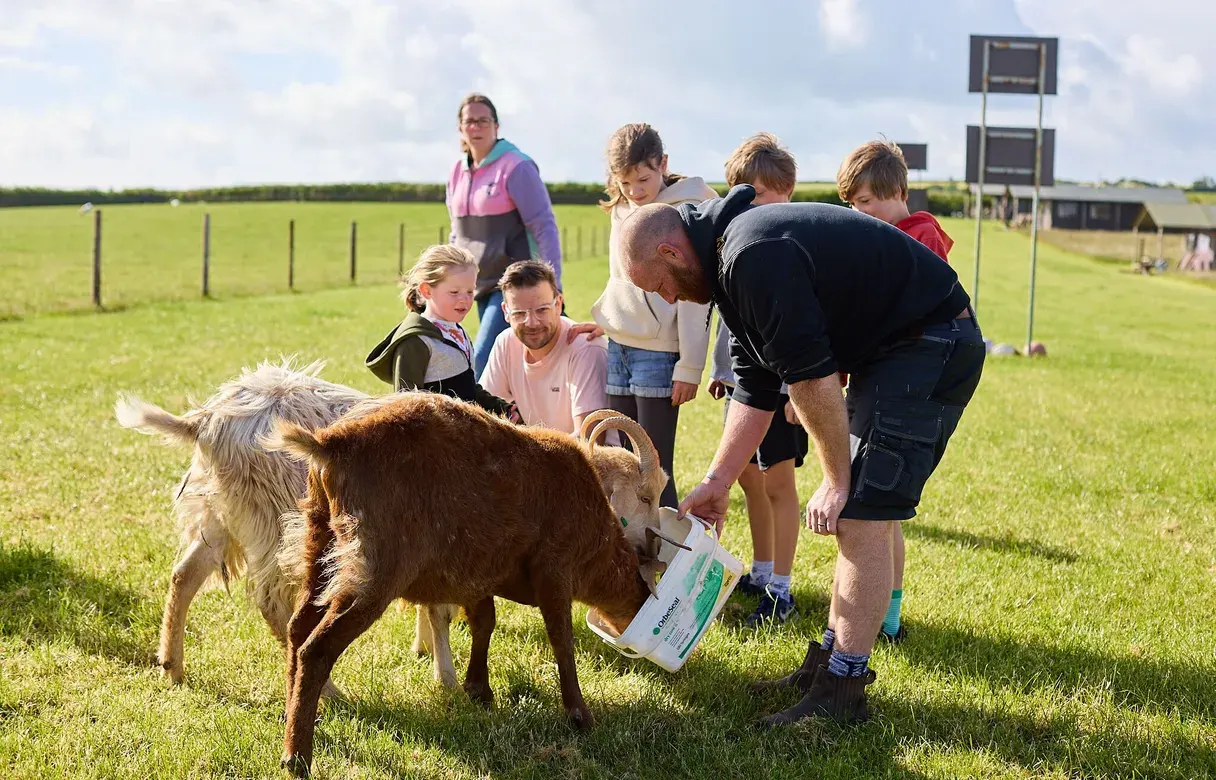
Bottle feeding lambs
Children queue up for this. Lambs end up on the bottle when a ewe has triplets and can't feed them all, or simply won't take one. A hungry lamb pulls so hard you'll need both hands, tail going like a windscreen wiper, and once it's empty it'll have a go at your coat zip!
Watching lambs being born
You can't book it. Most ewes lamb without help, often at night, and farmers keep the shed calm. If the farmer waves you over, stand still at the hurdle and let the ewe get on with it. Within an hour or so the lamb should be up on its knobbly legs, nosing about for its first colostrum.
The words you'll pick up
- Ewe and tup: the mum and the ram.
- Colostrum: the thick first milk, packed with antibodies.
- Jug pen: the small pen where a ewe and her lambs bond for a day or two.
- Spray marks: matching numbers so the farmer can pair ewes and lambs in the field.
- Pet lamb: an orphan raised by hand, usually the friendliest in the flock.
Which of our farms have spring lambs?
Every stay in this table lists lambs among its animals. Dates move a little each year with the weather, so if newborns matter most, ask which week the first lambs are due before you book.
| Farm | Area | Other animals | Hot tub | Dogs | Stays from |
|---|---|---|---|---|---|
| Hidcote Manor Farm | Cotswolds | Horses or ponies | No | No | £400 |
| Hollings Hill Farm | Cotswolds | Ponies, cows | Yes | No | £570 |
| Gwel Teg Farm | Cornwall | Goats, cows | Yes | Yes | £400 |
| Warren Farm | Somerset | Goats, calves, chickens | No | Yes | £260 |
| Manor Farm | Hampshire | Chickens, ducks | Yes | Yes | £355 |
| Sunninglye Farm | Kent | Goats, donkeys, pigs | No | Yes | £345 |
| New Barn Farm | Bedfordshire | Goats, donkeys, pigs, guinea pigs | No | Yes | £471 |
| Pant y March | Gwynedd | Horses, cows, chickens | Yes | Yes | £275 |
| College Farm | Norfolk | Chickens, cows | No | No | £230 |
| Upper Shadymoor Farm | Shropshire | Ducks, ponies, chickens | No | No | £400 |
Hidcote Manor Farm: early lambs in the Cotswolds
Hidcote lambs early. Most of its lambs are born before the first canvas lodge guests arrive in April, so you'll meet them in the fields at a few weeks old, leaping off anything they can climb. It suits the Easter holidays, and our other Cotswolds farm stays are close by if dates are tight.
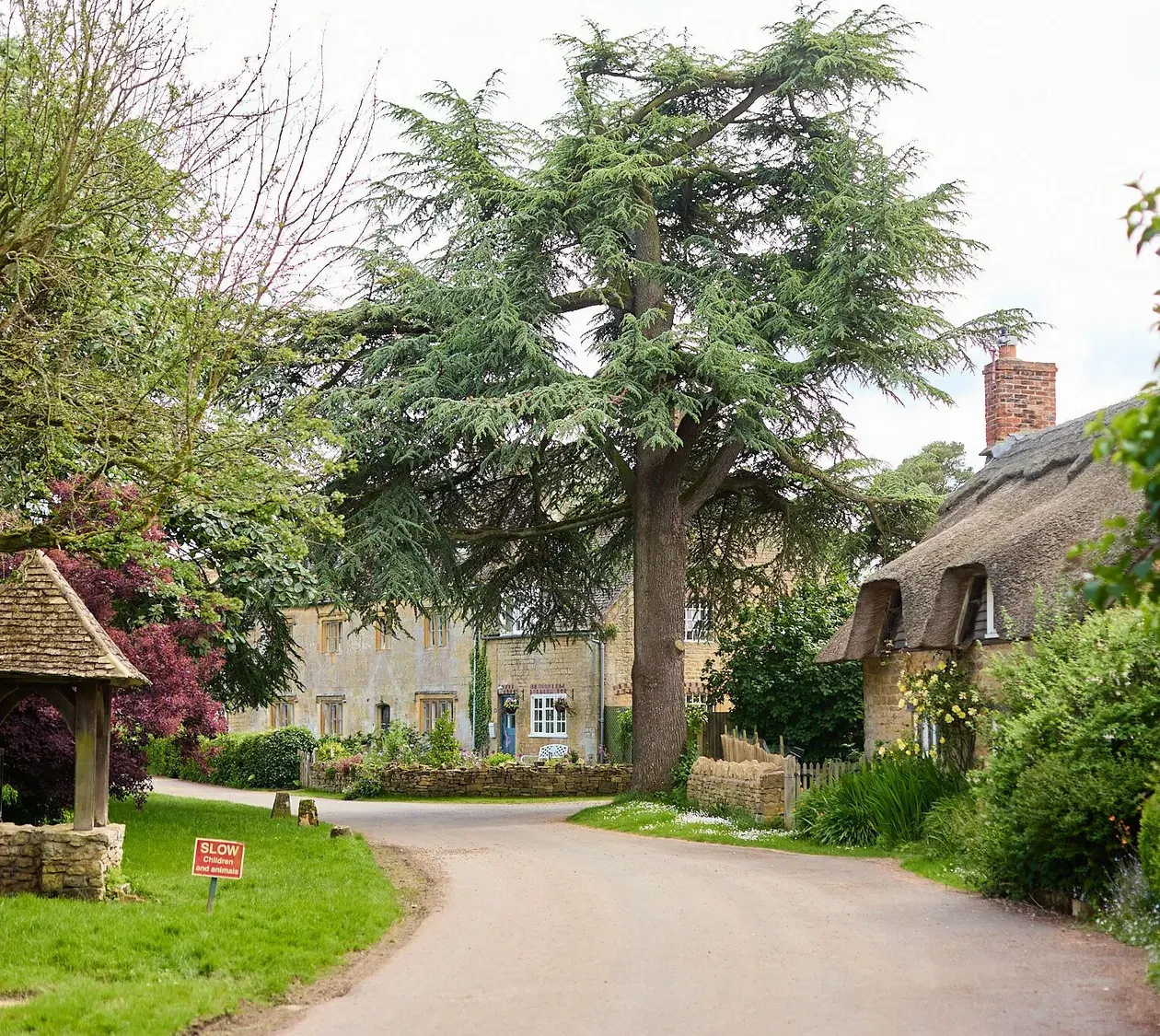
Warren Farm: late lambing above Cheddar Gorge
High on the Mendips, Warren Farm doesn't start lambing until May, with a big flock of Welsh Mountain ewes. That makes it a strong bet for the May half term, when most lowland lambs are already weeks old.
Dogs can come too, on a lead around the flock.
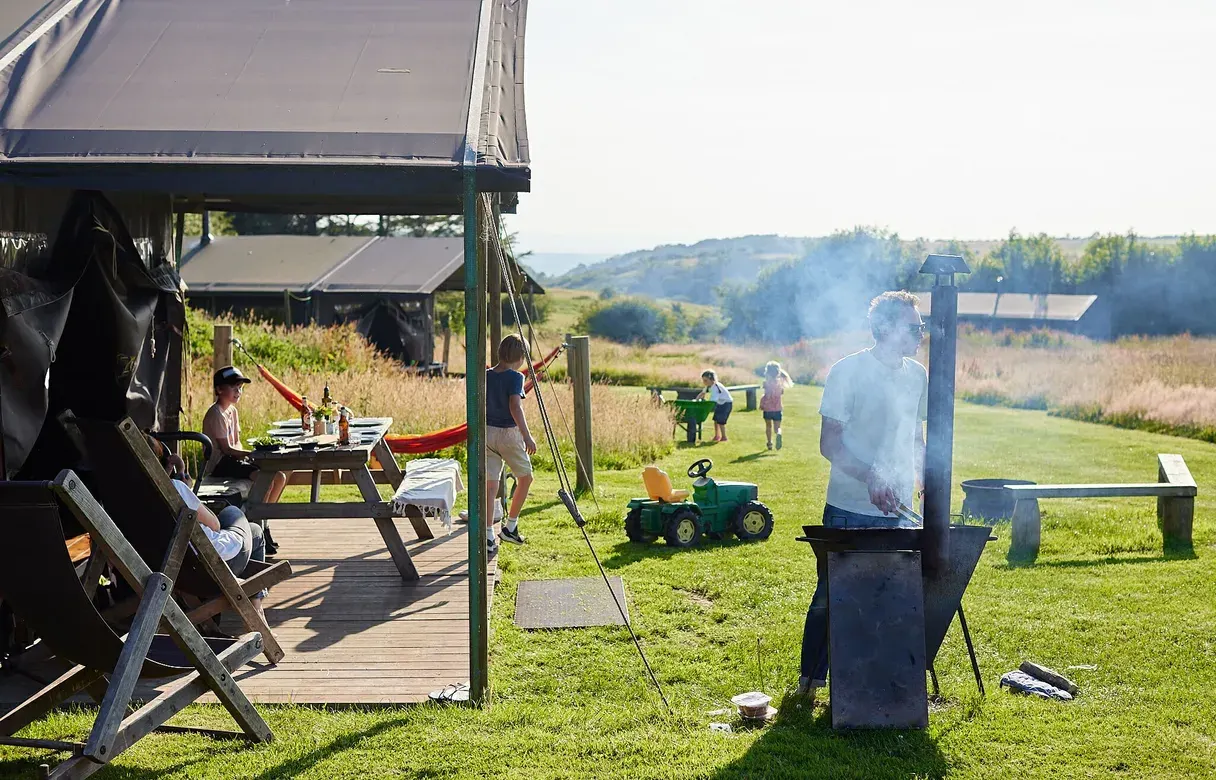
Gwel Teg Farm: the most southerly
Gwel Teg is the most southerly farm in the Feather Down family, with the mild Cornish spring, sheep, goats and cows to meet, and a hot tub for after the evening check. See our Cornwall farm stays for the rest.
Lambing etiquette: dogs, footpaths and staying safe
A lambing farm is a nursery and a workplace at once, and the farmer may have been up half the night.
- Keep dogs on a lead around sheep. The Countryside Code calls it good practice wherever you're walking, and a chase can split lambs from their mothers.
- Never pick up a lamb in a field. Its mum is usually close by, and your scent can make her reject it. Tell the farmer instead.
- Wash hands with soap and water after the animals and before snacks.
- Leave gates as you find them and stick to the farm's paths.
- Follow the farmer's lead in the shed: quiet voices, no climbing on hurdles, no flash.
If you're pregnant
Official UK government advice is that women who are, or may be, pregnant should avoid close contact with animals that are giving birth. That means not helping ewes to lamb, keeping away from newborn lambs and afterbirth, and not handling boots or clothes worn in the shed. Partners who join in should wash and change before coming back to the tent. Watching from the field gate is still lovely.
What to pack for a lambing weekend
Spring swings from frost at dawn to warm sun by lunch, and the lambing shed is mucky whatever the forecast says.
- Wellies for everyone, plus a spare pair of socks per day
- Waterproof trousers, or old jeans you don't mind ruining
- Warm layers and a hat for the early animal round
- Head torches for the walk to the shed after dark
- An old coat for bottle feeding (lambs chew zips)
- Soap, a towel and hand wipes for after the animals
- A bag for muddy boots in the car home
- Hot water bottles for chilly April nights
Back at the tent, the wood-burning stove dries the socks. See which stays have one in glamping with a wood burner.
Booking your spring farm stay
Easter and the May half term are the busiest weeks, as they land right in lambing time and the schools are off, so book those early. For late spring, pick a hill farm like Warren; for Easter, an early lowland one like Hidcote. Term-time midweek stays are quieter, and the farmer has more time to chat.
Browse our family farm holidays and working farm holidays, or narrow it down to farm stays with a hot tub or dog-friendly farm stays. You can compare every stay side by side on Farm Stays UK.
Questions people ask
What months are lambs born in the UK?
Mostly February to April, though a few flocks start in November and hill farms often lamb in April and May, so there are newborns somewhere for about half the year.How long is a sheep pregnant for?
Around 145 days, so about five months. That's why rams going in with the ewes on Bonfire Night means lambs around the start of April.Can children help with lambing on a farm holiday?
On farms that invite guests on the animal round, children can usually help with feeding, hay and the bottle lambs. Helping with an actual birth is up to the farmer. The ewe's welfare always comes first, so it depends on the day.Can you bottle feed lambs on a farm stay?
Often, yes. Most farms with lambs have a few on the bottle in spring, usually triplets or orphans, and guests can help at feeding time. It's never guaranteed, so ask the farm before you go.Is it safe to visit a lambing farm when pregnant?
UK government advice is to avoid close contact with sheep that are giving birth, newborn lambs and afterbirth, and anything worn in the lambing shed. Seeing lambs from the field gate is fine.Can I take my dog on a lambing break?
Yes, at farms that welcome dogs, such as Gwel Teg, Warren Farm, Manor Farm, Sunninglye, New Barn Farm and Pant y March, as long as your dog stays on a lead around the sheep.When is the best time to see lambs in the fields?
April and early May. By then most lowland lambs are a few weeks old and out with their mums. Go out at dusk and you'll see them racing up and down the field in little gangs.What is a lambing weekend?
A short break timed for lambing time on a working farm, usually in March, April or May, when you can help with the animal round, feed the bottle lambs and maybe see a birth.Find your farm stay
Compare every farm by animals, showers, hot tubs and dog rules.