Why a cow needs a calf before she makes milk, how grass becomes milk in her four stomachs and udder, and the farm stays where your family can watch it happen.
Stand by a field gate on a dairy farm and you'll notice the cows are hardly ever doing nothing. They're grazing, drinking at the trough, or lying down with their jaws going round and round, chewing the same mouthful for the second or third time. All that chewing is where the milk in your fridge begins.
So how do cows produce milk? A cow has to give birth first. Then her four-chambered stomach turns grass into fuel, and millions of tiny cells in her milk bag turn that fuel into milk. Here's each step in plain English, with the real numbers, what happens to the calves, and the farm stays where your family can watch it happen.
Does a cow have to have a calf to make milk?
Yes. Like every mammal, a cow only starts producing milk after she gives birth to a calf, because the milk is there to feed her young. Bulls never make milk, and neither do young female cows, called heifers, until their first baby arrives.
On most British dairy farms a heifer has her first calf at around two years old, after a pregnancy of about nine months, much like ours. Once she's had it, the mother keeps producing milk for around ten months, as long as she's milked every day. Farmers then stop milking her for roughly two months before she's due again, so the cycle comes round about once a year.
That break is called the dry period.
It gives the milk-making tissue time to rest and repair before the next lactation. Most dairy cows are pregnant again within about three months, so for much of the year they're carrying one calf while still giving milk from the last.
| Stage | Roughly how long (months) | What's happening | What you might see on a farm stay |
|---|---|---|---|
| Birth | 0 | The newborn arrives and the first milk, colostrum, comes in | New calves in deep straw pens |
| Early lactation | 2 | Milk climbs fast and peaks at around six to eight weeks | Cows eating hungrily at the feed barrier |
| Mid and late lactation | 8 | Milk slowly tails off while she's in calf again | The cows out grazing between milkings |
| Dry period | 2 | No milking, so her body rests before the next birth | Heavily pregnant cows in a separate field |
What does a dairy cow eat?
Milk starts in the field. A dairy cow's diet is mostly grass in summer and silage (grass pickled in a clamp) or hay in winter, often topped up in the shed with cereals and a protein feed. Farmers balance that diet carefully, because what goes in the front end decides how much comes out at milking time.
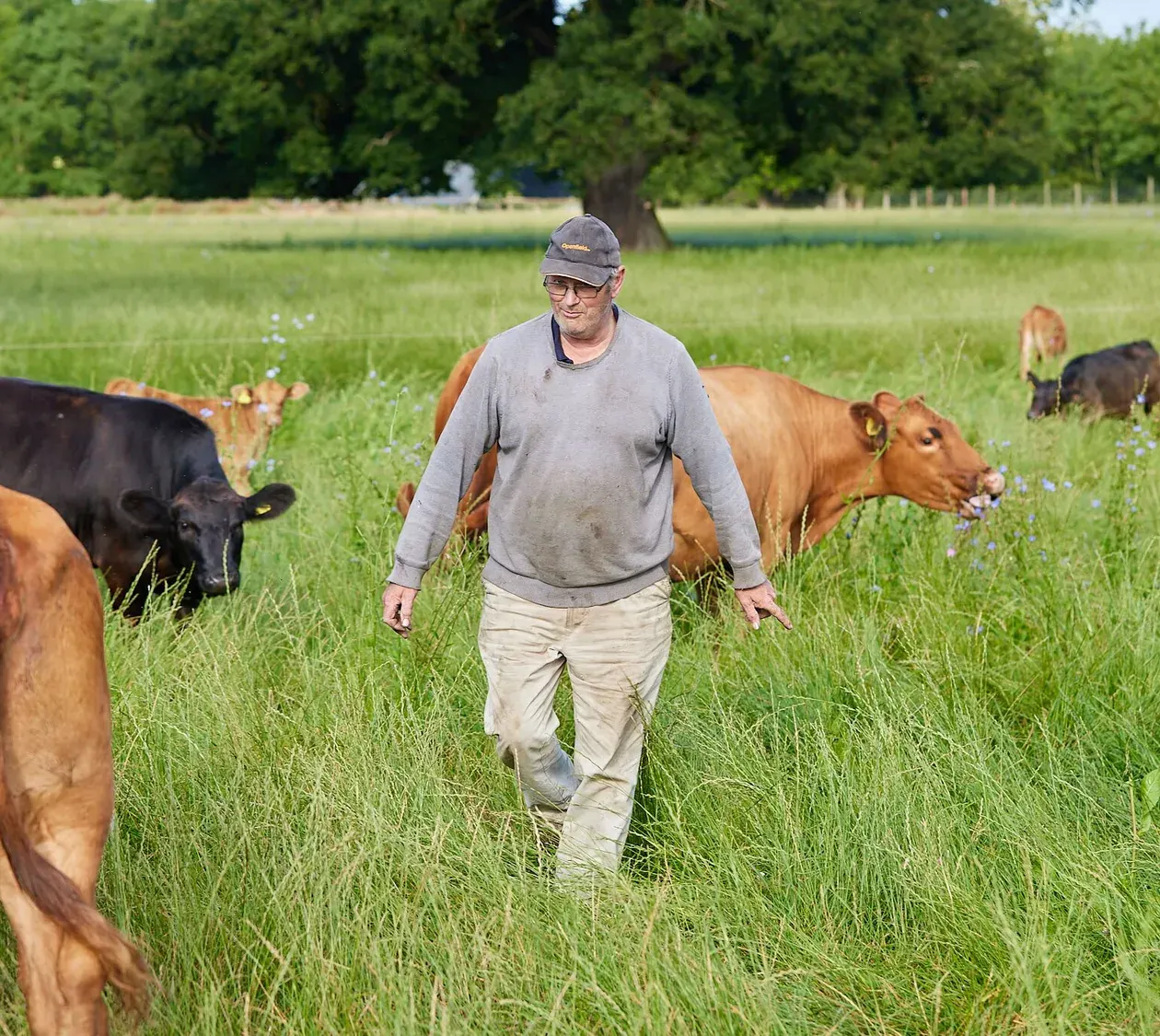
She's a big drinker too. Milk is mostly water, so a cow in full milk needs around three times as much to drink as she gives, which can mean well over a hundred litres a day in summer.
Four stomachs: how cows make milk from grass
People can't digest grass at all, and a cow couldn't either without help. That help comes from four chambers:
- The rumen is the biggest, roughly the size of a dustbin, and it's full of microbes that ferment tough plant fibre into fatty acids the cow can use.
- The reticulum sorts the food and sends lumps back up to be chewed again. That's chewing the cud, and cows spend hours a day at it, mostly lying down.
- The omasum squeezes out liquid and soaks up some of the goodness.
- The abomasum is the true stomach, using acid much as ours does.
From there the nutrients pass into the bloodstream, and this is the part that surprises most people. For every pint of milk, roughly 500 pints of blood have to flow through the cow's milk glands, according to the UN's Food and Agriculture Organization. Her heart works hard all day long.
How do cows produce milk inside the udder?
This is where cows make milk. The bag is split into four separate quarters, each with its own teat. Inside every quarter are millions of tiny hollow sacs lined with milk-making cells, clustered like bunches of grapes and linked by little ducts that run down to a small cistern above the teat.
Those cells pick up sugar, fats and amino acids as they flow past and build them into milk. Glucose becomes lactose, and lactose pulls liquid in with it, so more lactose means more milk.
Two hormones run the show:
- Prolactin switches milk production on around the birth and keeps it going.
- Oxytocin makes the tiny sacs contract and push milk down towards the teats. Farmers call it the let down, and it's triggered by a calf nuzzling or by the familiar sounds of the milking parlour. It only lasts a few minutes, which is why milkers like a calm cow and a steady routine.
Here's the clever bit.
Milk production works on supply and demand, so if the milk is taken away regularly, by a calf or a machine, the cells keep producing milk, but stop removing it and the cow slowly dries up. That's why dairy cows are milked at least twice a day, every day of the year, and our guide on how to milk a cow by hand or machine has the whole routine.
Why is the first milk so important?
Colostrum, the first milk after birth, is thick, yellow and packed with antibodies, because calves are born with almost no immunity of their own. AHDB's colostrum advice for calves recommends a first feed of about 10% of the newborn's body weight, ideally within two hours, as its gut absorbs antibodies far less well after that. In England the law says every calf must get colostrum within six hours.
How much milk does a dairy cow make?
The average British cow gave 8,278 litres in 2024, far more than her calf would ever need, according to AHDB's UK milk yield figures. That's roughly 40 pints a day across the whole year!
All cows make milk the same way, but breed makes a big difference. The black and white Holstein Friesian, the most common dairy cow in Britain, has been bred to produce the biggest volumes, while the Jersey, a smaller, honey-coloured breed, gives less but much creamier milk, which is why Jersey and Guernsey milk ends up as gold top. Across the UK, milk production averages about 4.3% butterfat and 3.4% protein.
Health matters as much as breeding. Good welfare and good yields go together: a comfortable cow on a good diet gives more, while lameness or mastitis (an infection in one of the quarters) cuts milk production quickly.
What happens to a dairy cow's calves?
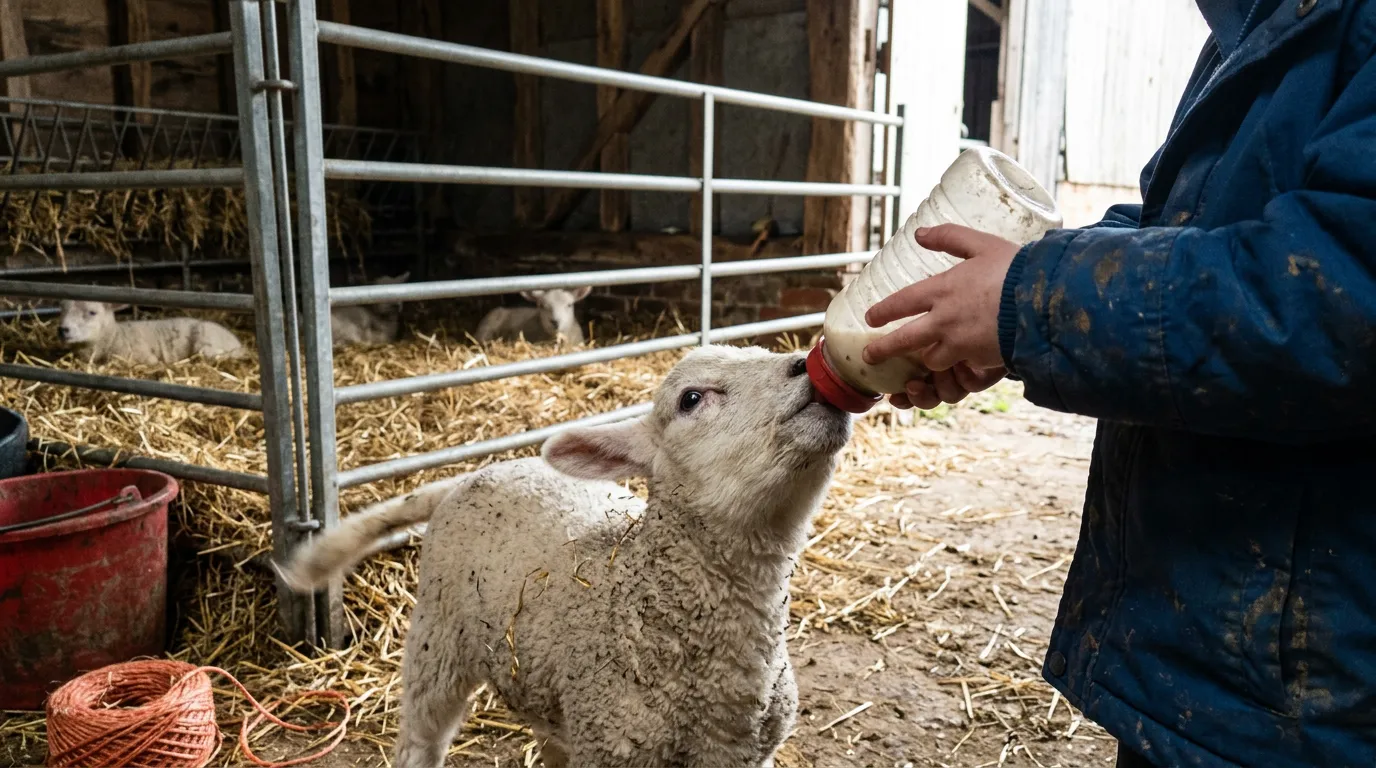
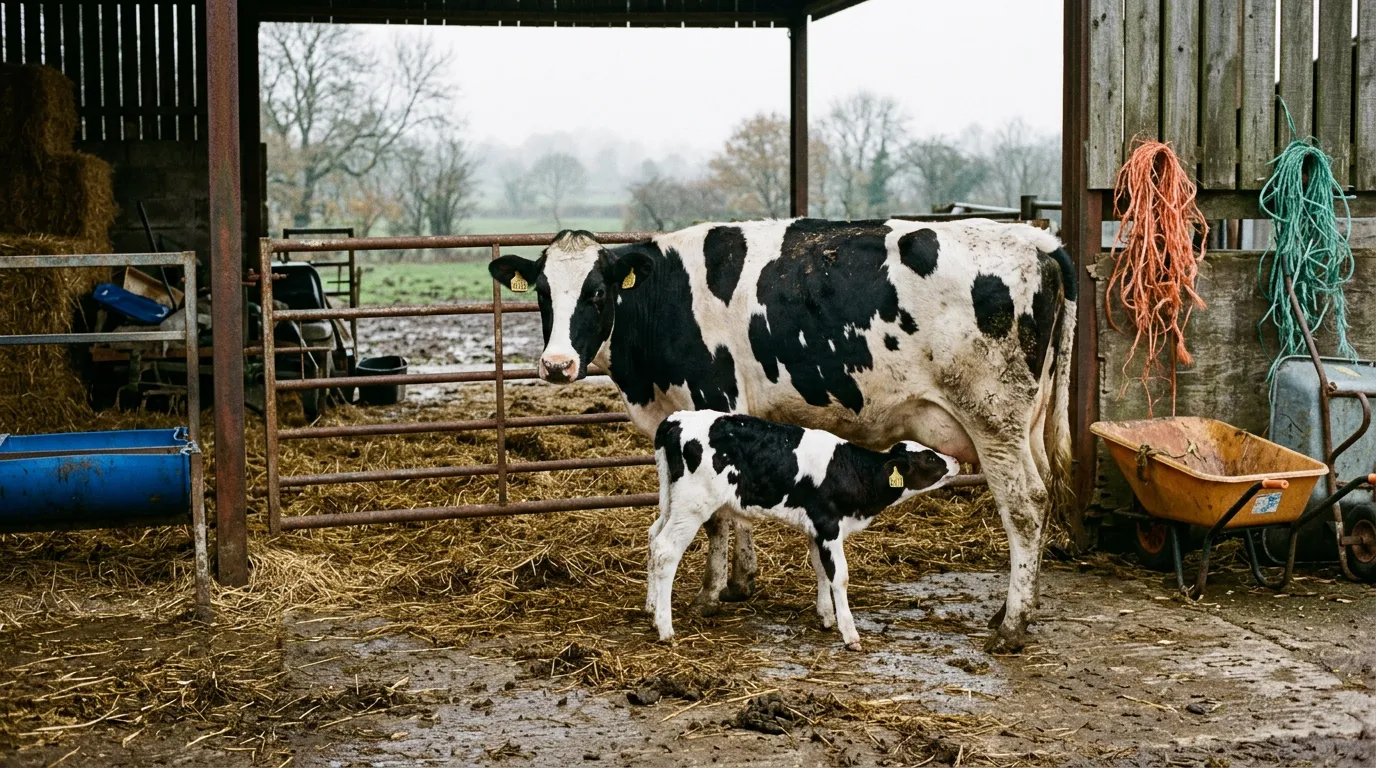
It's usually the first thing children ask, and it deserves a straight answer. On most British farms the calf stays with its mother for a day or two, then moves to its own pen or a small group, where it's fed milk from a bottle or teat feeder until it's weaned onto solid food at around two months old.
Female calves usually grow up to become dairy cows themselves. Male calves can't make milk, so they're reared for beef. The GB Dairy Calf Strategy, launched by AHDB and the NFU in 2020, set out to make sure every dairy calf is reared for a purpose, and with sexed semen and beef cross breeding, the number of dairy bull calves born in Britain has fallen by about 65% in ten years.
A small but growing number of farms keep calves with their mothers for weeks or months and share the milk. The RSPCA's dairy cow welfare pages explain the different systems, and what the RSPCA Assured label means if animal welfare guides what you buy.
See it for yourself on a dairy farm stay
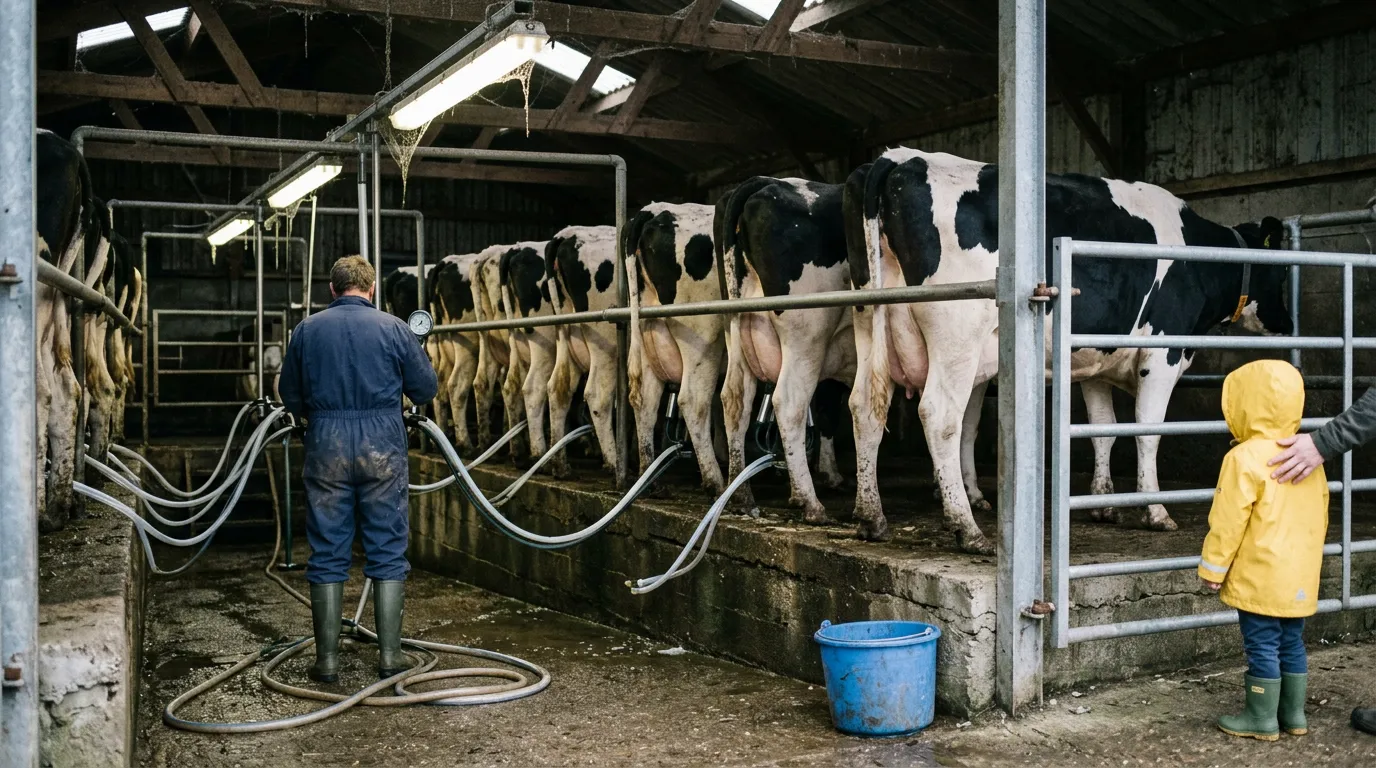
When a seven-year-old wants to know how cows make milk, the best answer is a morning on a working farm. Reading about the rumen is one thing. Watching a cow lie in the straw chewing the cud, then seeing her walk calmly into the parlour, is when it clicks.
- Spot a cow chewing the cud and watch her swallow and bring up the next mouthful
- Count the four teats on a cow in the parlour
- Find the newest arrival in the shed and find out its age
- Listen for the cows heading in for milking
- See the steel milk tank, kept chilled until the tanker arrives
- Guess how much a cow drinks from the trough each day
- Wash hands with soap and water after touching the animals
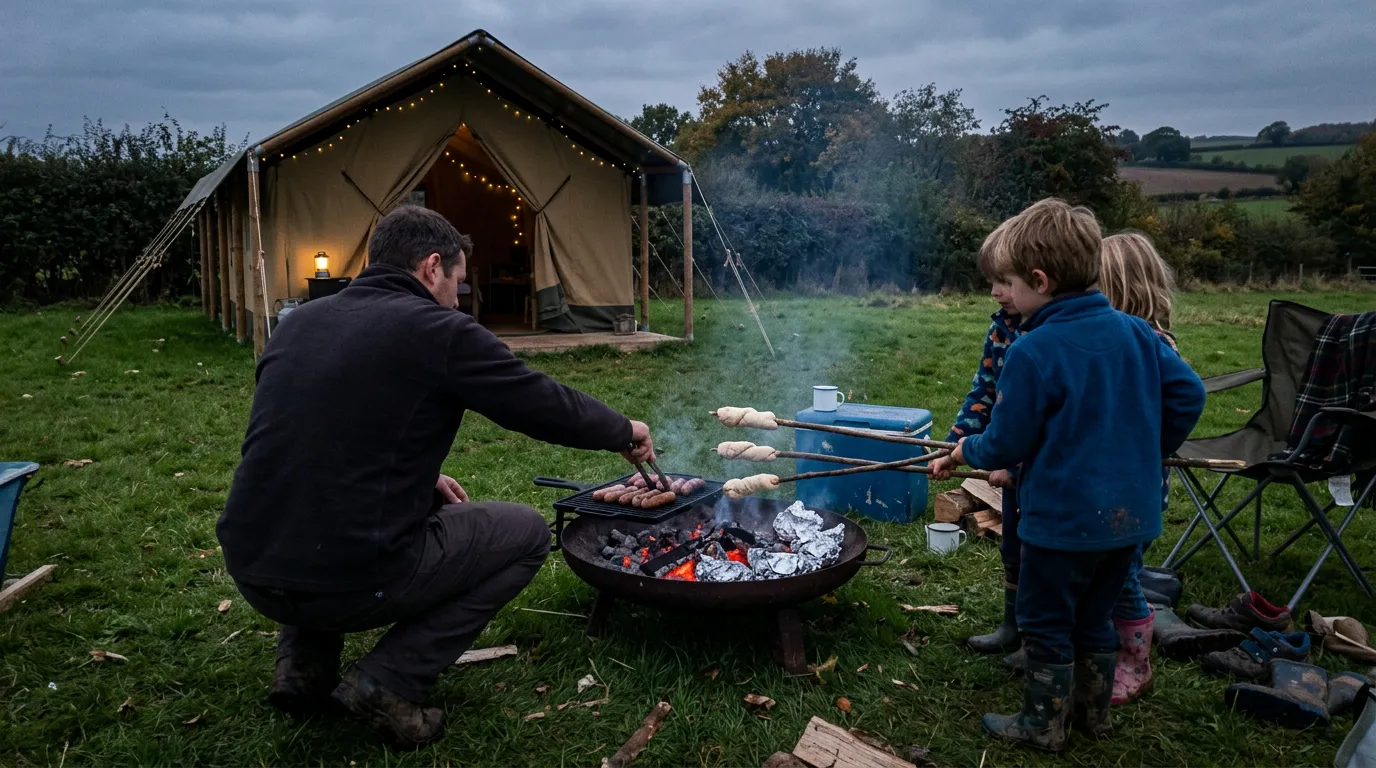
Two of the farms on our site let guests watch the cows being milked. At Billingsmoor Farm, Jayne and Robert's organic dairy in mid Devon, there are calves to meet and a farm tour, then a hot tub, an honesty shop and pizza nights back at the canvas lodges. Dogs are welcome, and it's one of the stays on our Devon farm stays page.
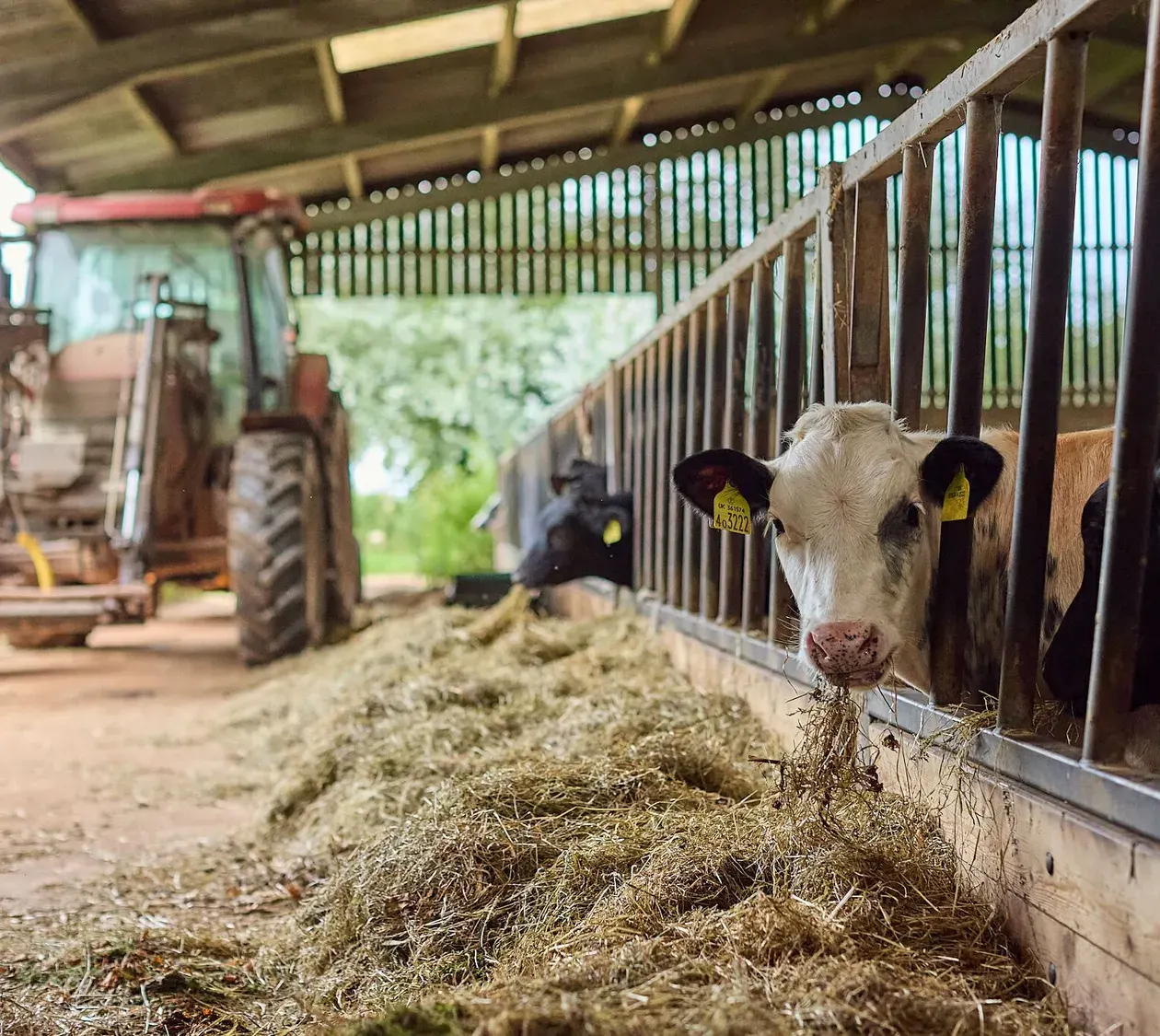
Near Malvern, Faye and Austin's working herd is milked on the farm at Hollings Hill Farm, with ponies, spring lambs and a hot tub too.
For calves, look at Moor Farm in the Gloucestershire Cotswolds, where Wendy and Richard keep cows, calves, goats and ponies, or Warren Farm above Cheddar Gorge, with goats, chickens and a big play fort as well. In Cornwall, the Dennis family run farm tours at Gwel Teg Farm, and Foxglove Farm in West Berkshire adds pigs to its cows and calves.
| Farm | Area | Cows on the farm | Watch the milking | Dogs | Stays from (£) |
|---|---|---|---|---|---|
| Billingsmoor Farm | Mid Devon | Organic milking cows and calves | Yes | Yes | 450 |
| Hollings Hill Farm | Near Malvern | Working milking herd | Yes | No | 570 |
| Gwel Teg Farm | Near Looe, Cornwall | Cows, sheep and goats | Farm tour | Yes | 400 |
| Warren Farm | Cheddar, Somerset | Cows and calves | Farm tour | Yes | 260 |
| Foxglove Farm | West Berkshire | Cows and calves | Farm tour | Yes | 260 |
| Moor Farm | Gloucestershire Cotswolds | Cows and calves | Farm tour | Yes | 250 |
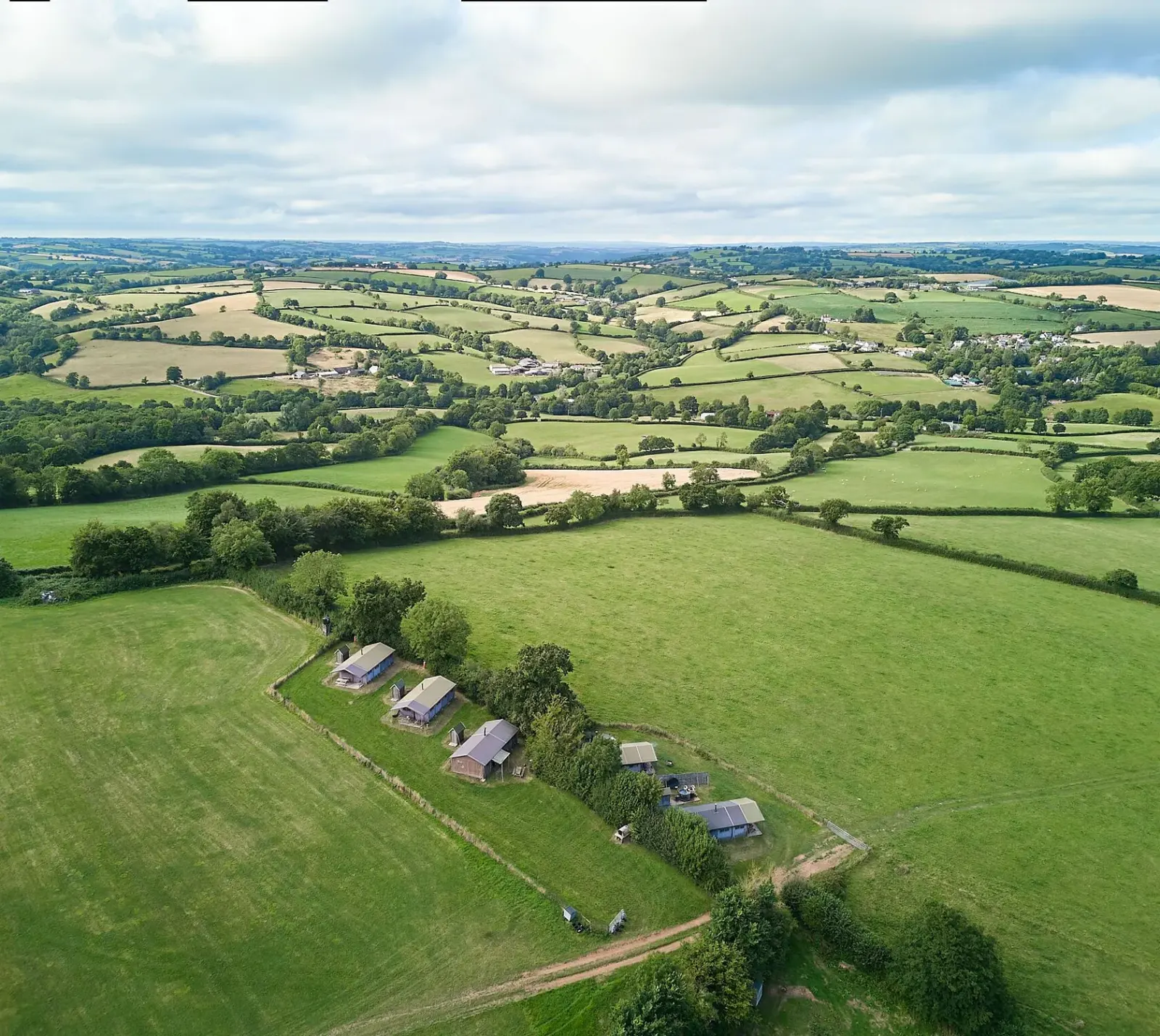
Plenty of herds have calves born all year round, so there are often youngsters about whatever month you go. Spring adds lambs on the mixed farms; our lambing season guide has the dates, and bottle feeding lambs explains how children can help. For more animals in one place, browse our farm stays with animals or compare every farm on all our farm stays.
Bring wellies and plenty of questions. Then pick your farm from our family farm stays across the UK and ask the farmer, on your first evening, what time the cows come in.
Questions people ask
Do cows produce milk all the time?
No. A cow only comes into milk after she's had a calf, then gives milk for around ten months. Farmers stop milking her for about two months before she's due to give birth again, which is called the dry period.Can a cow make milk without having a calf?
Not naturally. A heifer only starts making milk once she's had her first calf, usually at around two years old, and bulls never make milk at all.Why do dairy cows make so much milk?
Generations of breeding for yield, plus regular milking. Taking the milk away twice a day tells the cow's milk cells to keep going, so the average British cow now gives roughly 40 pints a day across the year.What do cows eat to make milk?
Mostly grass in summer and silage or hay in winter, often topped up with cereals and a protein feed, plus plenty to drink.Is milk straight from the cow safe for children?
Raw milk hasn't been heat treated, and the Food Standards Agency advises that young children, pregnant women, people over 65 and anyone with a weaker immune system shouldn't drink it. Pasteurised milk from the farm shop is the safe choice.Can children see calves on a farm stay?
Yes. Billingsmoor, Moor Farm, Warren Farm and Foxglove Farm all list calves among their animals, and there are often youngsters about whatever month you go.Find your farm stay
Compare every farm by animals, showers, hot tubs and dog rules.