The hand-milking squeeze, how a parlour machine copies a calf, why cows are milked twice a day and the dairy farm stays where your family can watch the herd come in.
It's half past five, still dark, and the yard smells of silage and warm cows. The parlour lights flick on, the vacuum pump starts its steady thud, and a line of black and white Holsteins walks in without being asked, each one heading for the same stall she had yesterday. Within a minute the first milk is running down the pipes.
Most of us never see that. So here's how to milk a cow properly, by hand and by machine, why a herd has to be milked twice a day whatever the weather, and which of our farm stays let you stand in the parlour and watch it happen.
Why do cows need milking every day?
A cow only makes milk after she's had a calf. Her milk comes in at calving and she keeps producing it for around ten months, then the farmer stops milking her for a dry period of about two months before her next calf arrives.
Once she's in milk, it doesn't stop for weekends.
The udder has four separate quarters, each with its own teat, and they fill steadily all day. Leave a high-yielding cow unmilked and she gets sore and uncomfortable, and the risk of mastitis (an udder infection) climbs. That's why most British dairy farms keep to a strict routine, milking at roughly the same times every morning and afternoon, 365 days a year, Christmas Day included.
The numbers are big. Great Britain has about 1.6 million dairy cows, and the average one gives around 8,200 litres a year, according to AHDB, the levy board that supports British farmers. That's roughly 25 litres a day, or a good few dozen pints from every cow.
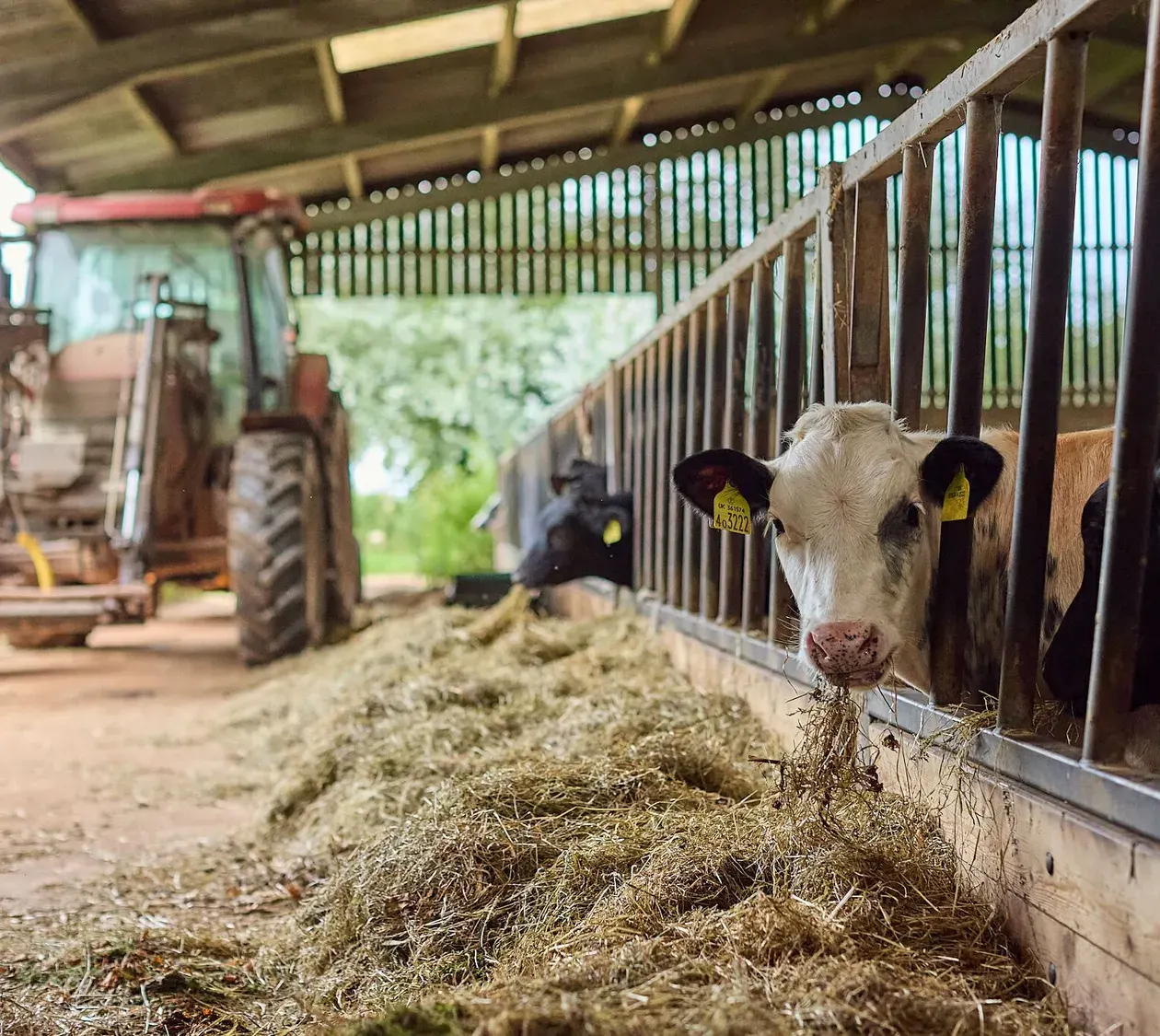
How to milk a cow by hand, step by step
Hand milking is slower than you'd think and harder on the wrists. A practised hand milker takes 20 to 30 minutes for one gentle Jersey cow, and beginners often need 40 minutes or more while they find the rhythm. The basic routine hasn't changed in centuries, though the hygiene has. Smallholders with a single milk cow often milk once a day and leave the calf on her the rest of the time, which farmers call calf sharing.
The kit for milking a cow by hand
- A low, sturdy stool
- A clean stainless steel bucket
- Disposable gloves
- Teat dip (a mild disinfectant) and a dip cup
- A strip cup for the first squirts
- Clean cloths or paper towels, one per teat
- Udder cream if the teats feel dry
- A milk filter and a jug for straining
Settle the cow and get your kit ready
A calm cow lets her milk down. A nervous one holds it back.
Tie her by a halter or close her head into a stanchion, give her some hay or feed to munch, and talk to her as you come alongside so she knows you're there. Sit on your stool at her right side with all your equipment within reach, because you won't want to stand up halfway through.
Clean the teats and strip the first milk
- Wash your hands and pull on clean gloves. Farmers wear them because clean gloves carry fewer bacteria than clean hands, and bacteria on the teat end are what cause mastitis.
- Brush off any straw or muck (only wash the teats if they're really dirty), then dip each teat in disinfectant and leave it for at least 30 seconds to work.
- Wipe each teat clean and dry with its own cloth or paper towel. Wet teats drip dirty water into the milk.
- Strip two or three squirts from every teat into a cup, never into the bucket. This first milk carries the most bacteria, and stripping lets you spot any clots that point to mastitis.
- Start milking within one to two minutes of first touching the udder, while the let down is in full flow.
The squeeze: thumb, forefinger, then the rest
Here's the bit everyone gets wrong at first. You don't pull the teat downwards like a bell rope. Wrap your hand round it, close your thumb and forefinger at the top to trap the milk inside, then squeeze with your middle, ring and little fingers in turn so the milk is pushed out of the end. Relax your grip, let the teat refill, and go again.
Work two teats at once, one in each hand, in an easy left, right, left, right rhythm. When the stream slows to a dribble, move to the other pair.
Finish, dip and look after the milk
Once all four quarters are soft and empty, dip the teats again with post-milking disinfectant, as the teat ends stay open for a while afterwards and that's when mastitis bugs get in. Strain the warm milk through a filter straight away and chill it fast. Then wash the bucket and every bit of equipment in hot water.
That last job is the one homesteaders complain about most!
How does a milking machine work?
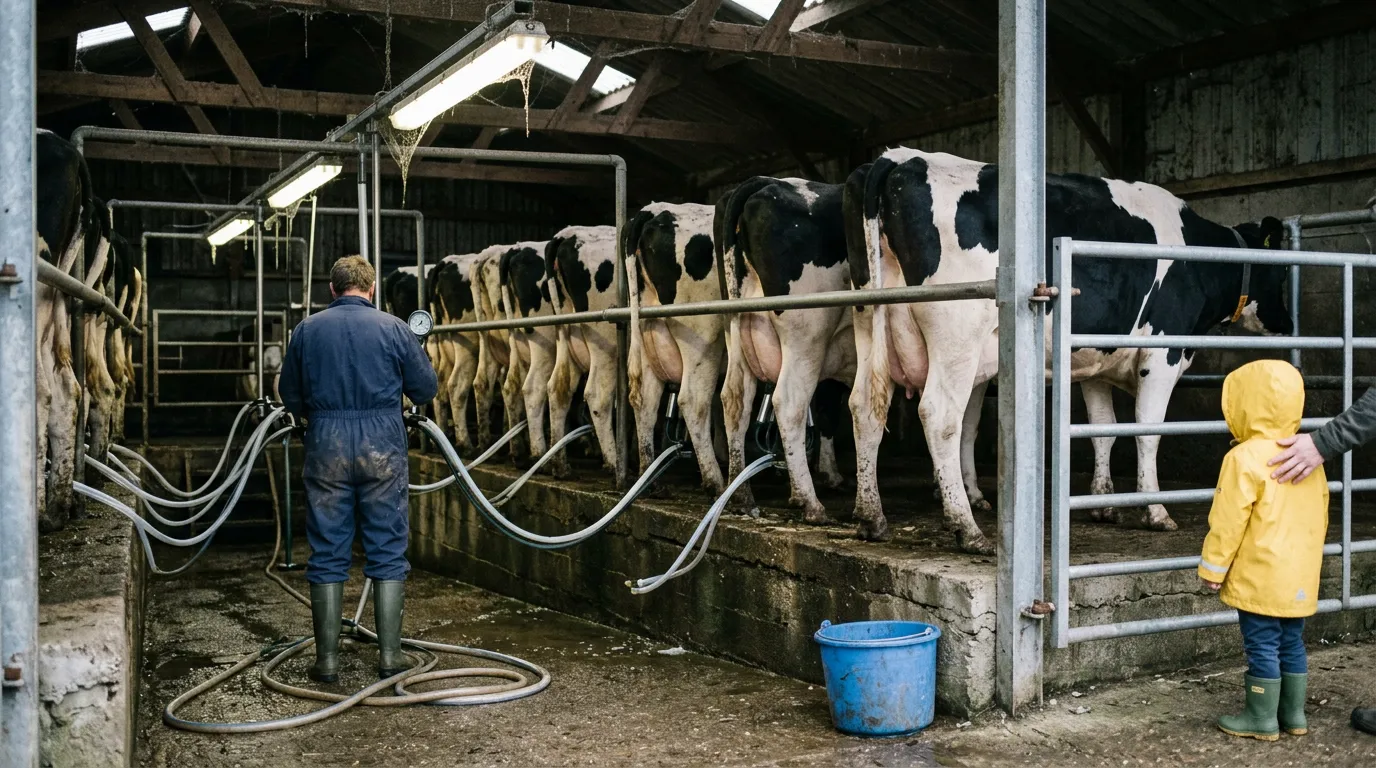
A modern parlour does exactly what your hand does, only faster and more gently. The machine milks each cow through a cluster: a central claw with four teat cups hanging from it. Each teat cup has a soft rubber liner inside, and a vacuum pump draws the milk out while a pulsator opens and closes the liner about once a second, copying the suck and rest of a calf. Constant suction would hurt the cow, so that pulsing matters.
Machine milking follows the same routine as milking a cow by hand, just at speed:
- The cows walk into the parlour and the farmer checks each udder.
- Wearing gloves, the milker pre-dips every teat with disinfectant, then wipes it clean and dry.
- The first milk is stripped and checked for signs of mastitis.
- The claw and its four teat cups go on within one to two minutes.
- The cups come off when the flow drops, and each teat is dipped again before she walks out.
AHDB's guide to dairy cow milking routines sets out the timings British farmers aim for, including fresh disposable gloves at every milking and putting the cups on calm cows with clean, dry teats. A steady routine means faster milking and less mastitis.
Most are done in five to ten minutes. From the claw the milk runs through stainless steel pipes into a refrigerated tank, where the tanker collects it every day or two. All the parlour equipment is washed through after every milking.
Then there are the robots.
Roughly one British herd in ten is now milked by robot, by industry estimates. Each one walks into the robot whenever she feels like it, tempted by a few nuts of feed, and a laser guides the teat cups on. Some cows choose to visit three times a day.
| Method | Time per cow (minutes) | Where you'll see it | Good to know |
|---|---|---|---|
| Hand milking | 20 to 40 | Smallholdings and the odd family milk cow | Cheap kit and tired wrists; a stanchion keeps her still |
| Parlour machine | 5 to 10 | Most commercial herds | Herringbone and rotary parlours milk a whole row at once |
| Robotic milker | 5 to 10 | A growing number of larger herds | Cows choose their own times, so there's no fixed milking hour to watch |
What's it like to watch the milking on a farm stay?
Nothing on a working farm happens on your schedule, and that's half the fun. Milking runs to the cows' clock, usually first thing in the morning and again in the late afternoon, so ask the farmer on your first evening when it'll be and whether you can come along. You'll hear the herd before you see it: hooves on concrete, the odd impatient moo, the pump starting up.
Children tend to stand very still the first time.
In a herringbone parlour the cows stand in two angled rows above a sunken pit where the farmer works, so you're at eye level with the udders and right next to the action. What children notice first:
- How warm the milk is when it comes out
- That every cow seems to know her own place in the queue
- How quickly the claw does the job compared with milking by hand
- The sheer size of a cow up close
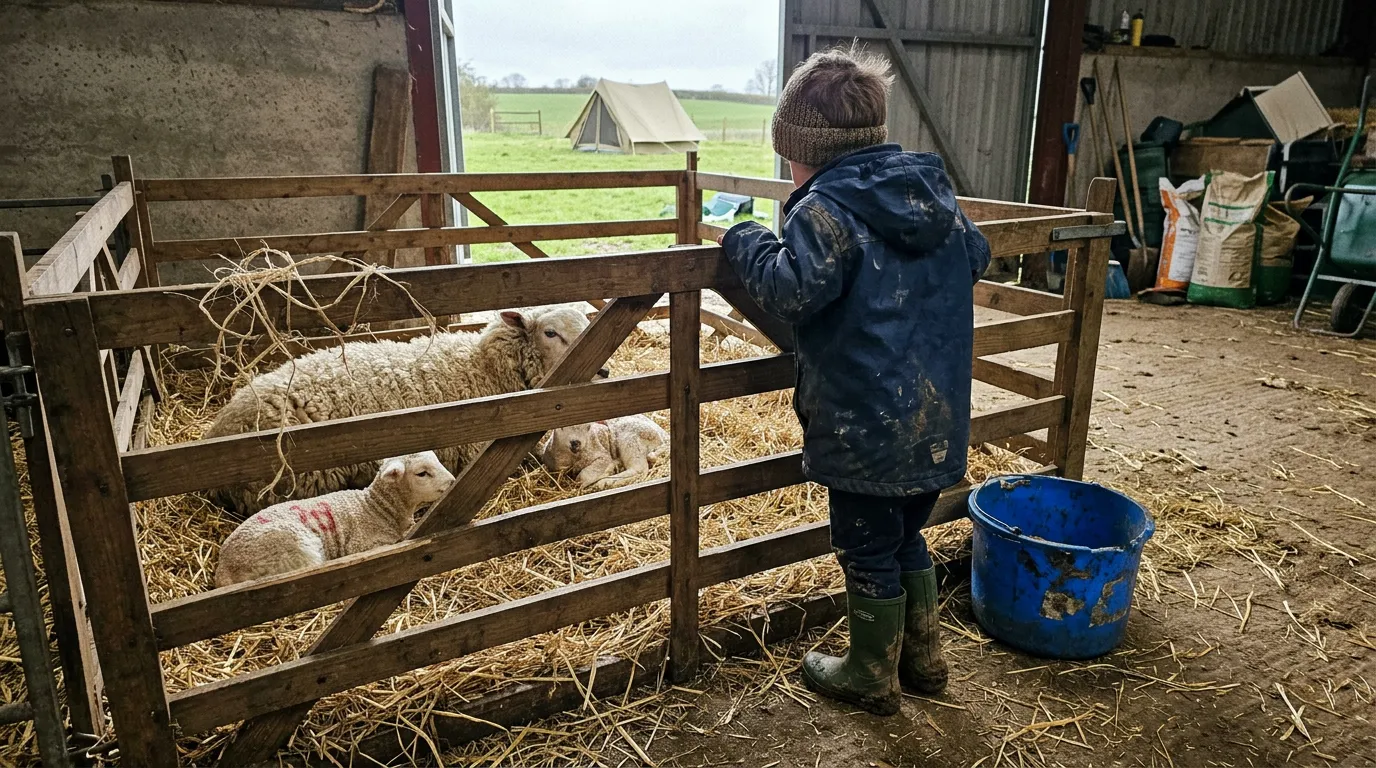
There are often young calves in the next shed too, and with a bit of luck you might even see a new one on wobbly legs.
A few simple rules keep everyone happy and well. Cows and their muck can carry E. coli O157, and the Health and Safety Executive's advice for farms open to visitors is clear: wash your hands with soap and running water, because hand gels and wipes are no substitute. The cows know their routine so well they'll mostly ignore you.
- Wellies or old trainers you don't mind hosing down
- A warm layer, as parlours are open sided and chilly at dawn
- Clothes you won't mind smelling of cows
- Hands washed with soap and water straight after, before any snacks
- No fingers in mouths until then
- Quiet voices and no running near the cows
- Stay where the farmer puts you, behind the rail or in the pit
Farm stays where you can watch the cows being milked
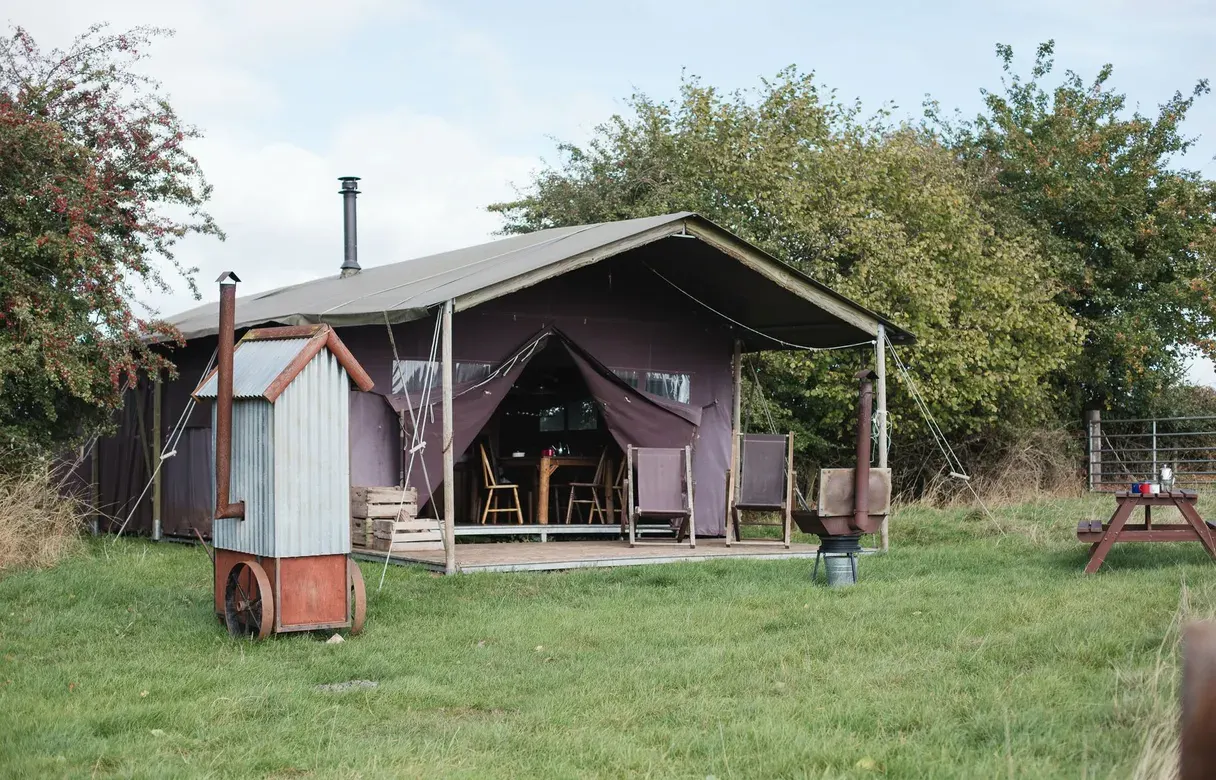
Two of the farms on our site list cow milking among the things guests can watch, and a third has its own milking herd and a farm tour. All three are off grid canvas lodges with wood-burning stoves, so the day starts with the kettle on the stove while the herd heads in for milking.
Billingsmoor Farm, Devon
Jayne and Robert run Billingsmoor Farm, an organic dairy farm in the rolling mid Devon hills about 28 minutes from Exeter. You can watch the cows being milked and join a farm tour, then come back to a hot tub, an honesty shop and pizza nights. The biggest of its five lodges sleeps ten, so it's a natural pick for two families sharing, and dogs are welcome. Stays start from £450, and guests score it 9.6 out of 10 from 196 reviews. It's one of the farms on our Devon farm stays page.
Hollings Hill Farm, near Malvern
Every one of the four lodges at Hollings Hill Farm has its own wood-fired hot tub, and Faye and Austin's working dairy herd is milked right here on the farm. Guests can watch the milking, take a farm tour and meet the ponies and spring lambs. It's about 65 minutes from Birmingham and doesn't take dogs. Stays start from £570, with a guest score of 9.4 from 208 reviews.
Gwel Teg Farm, Cornwall
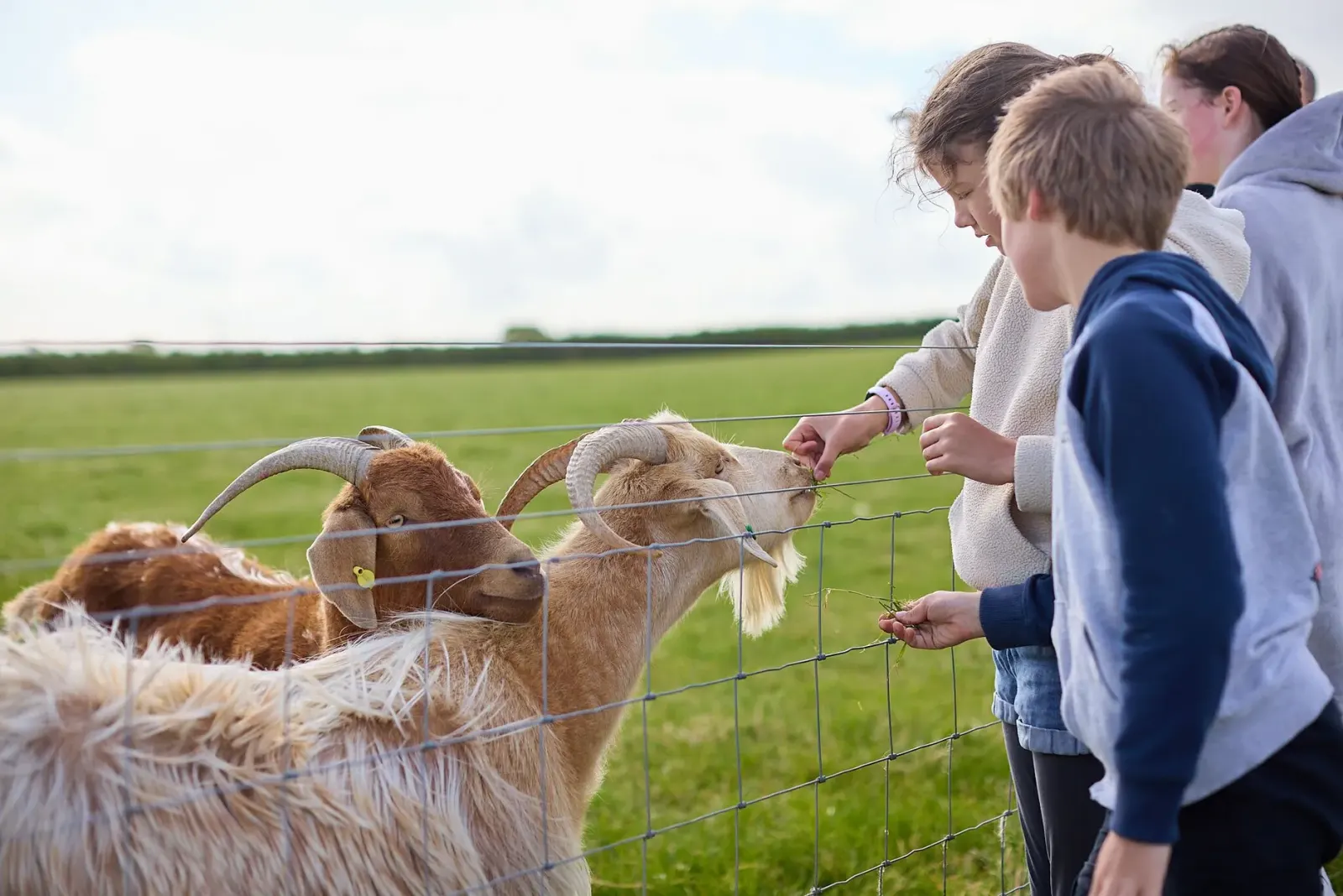
Near Looe, the Dennis family keep a milking herd alongside beef cattle, sheep and goats at Gwel Teg Farm. There's a farm tour, children can help feed the animals, and spring brings lambs. There's a playground, a hot tub lodge, and dogs are allowed. Stays start from £400. See more stays near the coast on our Cornwall farm stays page.
| Farm | Area | Dairy herd | Hot tub | Dogs | Sleeps up to | Stays from (£) |
|---|---|---|---|---|---|---|
| Billingsmoor Farm | Mid Devon | Organic, watch the milking | Yes | Yes | 10 | 450 |
| Hollings Hill Farm | Near Malvern | Working herd, watch the milking | Every lodge | No | 6 | 570 |
| Gwel Teg Farm | Near Looe, Cornwall | Milking herd, farm tour | Yes | Yes | 6 | 400 |
Want more animals than cows? Our pick of working farm holidays covers sheep, arable and mixed farms, and every farm we feature is compared side by side on all our farm stays.
Can you drink milk straight from the cow?
It's warm, a little sweet and creamier than anything from the supermarket. It's also raw, meaning it hasn't been heat treated to kill bacteria, and that matters on holiday.
In England, Wales and Northern Ireland raw cow's milk can only be sold directly to you by a registered producer, at the farm gate, at a farmers' market or from a milk round. In Scotland its sale is banned altogether. The Food Standards Agency's raw drinking milk advice says young children, pregnant women, people over 65 and anyone with a weaker immune system shouldn't drink it at all.
So enjoy the sight of the tank filling, and leave the tasting to the grown-ups who choose it. The pasteurised pint from the farm shop or village shop tastes just as good with breakfast by the stove.
Plan a dairy farm stay with the kids
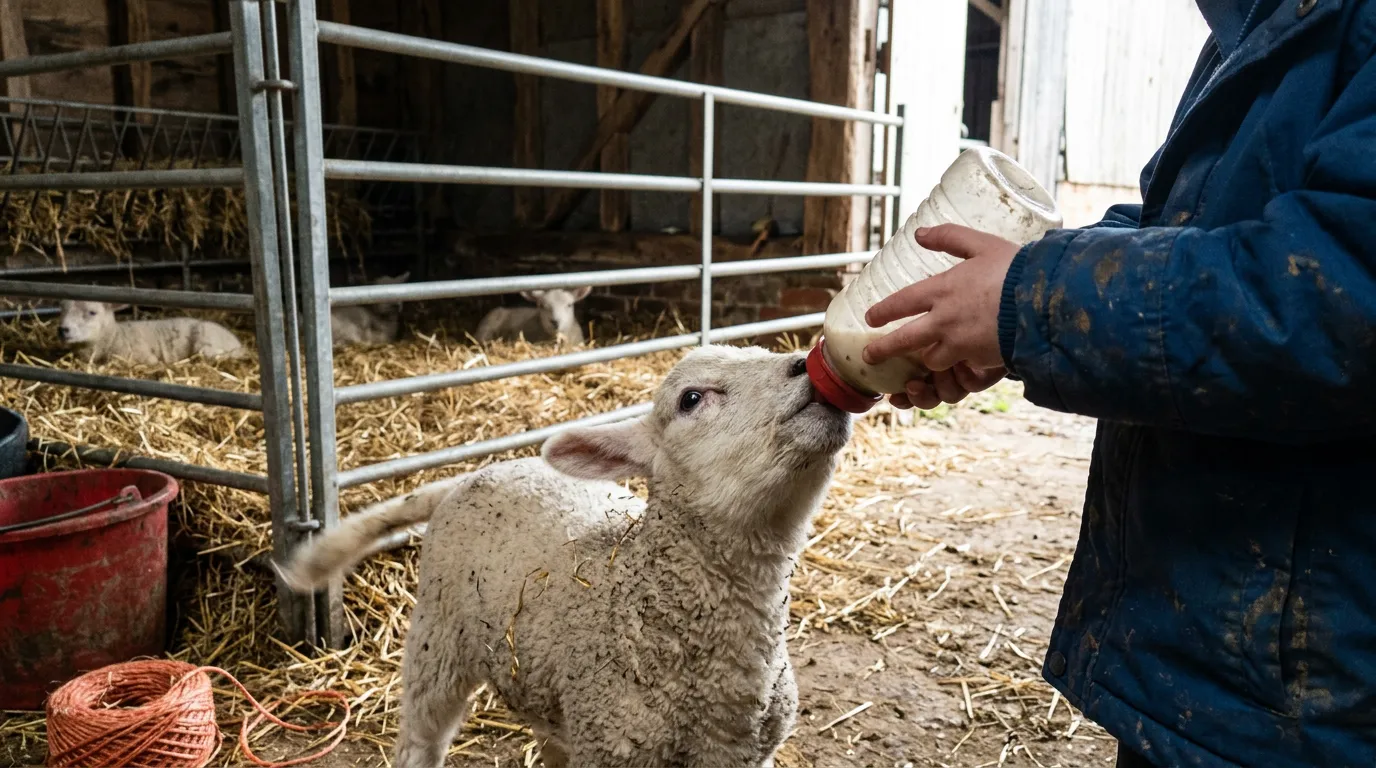
Watching the milking once is good. Getting up for it three mornings running, and noticing which cow always pushes to the front, is when children really start to understand where milk comes from. Spring is a lovely time to go, as there are often young calves and many farms have lambs too; our lambing season guide has the dates, and if you'd like to get hands on, read how bottle feeding lambs works on a farm stay.
Learning to milk by hand is one thing. Seeing a whole herd file into the parlour at dawn, with a mug of tea in your hand and the stove ticking back at the tent, is something else. Find your farm among our family farm stays across the UK and ask the farmer what time the cows come in.
Questions people ask
How long does hand milking take?
Around 20 to 30 minutes for someone who milks every day, and 40 minutes or more for a beginner. A milking machine in a parlour does most cows in five to ten minutes.How often are dairy cows milked?
Most British herds are milked twice a day, morning and late afternoon, every day of the year. Some farms milk three times, and cows using a robotic milker choose their own visits.Does milking hurt the cow?
No. Done properly it's a relief, as a full udder is uncomfortable. Hand milkers wear clean gloves and squeeze rather than pull, and milking machines pulse gently instead of sucking constantly, copying a calf.Does a cow have to have a calf to give milk?
Yes. A cow's milk comes in when she calves and lasts for around ten months. She then has a rest of about two months before her next calf.How much milk does a dairy cow give a day?
The average British cow gives around 8,200 litres a year, according to AHDB, which works out at roughly 25 litres a day. High-yielding Holsteins give more and Jerseys less, though Jersey milk is creamier.Can children milk a cow on a farm stay?
On a commercial farm the herd is milked by machine, so children usually watch from a safe spot rather than milk themselves. It's always the farmer's call. Ask on arrival when milking happens and whether you can come along.Which farm stays let you watch the cows being milked?
Billingsmoor Farm in Devon and Hollings Hill Farm near Malvern both list cow milking among the things guests can watch. Gwel Teg Farm near Looe in Cornwall has a milking herd and a farm tour.Find your farm stay
Compare every farm by animals, showers, hot tubs and dog rules.